
Blog
Constant Bad Dreams: Islamic Perspective, Possible Causes and What to Do

Constant bad dreams can be exhausting and frightening. A person may repeatedly experience nightmares, disturbing dreams, frightening scenes, being chased, falling, fighting, death-related dreams, strange figures, or other unpleasant experiences while sleeping.
When bad dreams happen repeatedly, some Muslims may wonder whether they are connected to black magic (sihr), jinn, shaytan, evil eye, or another spiritual problem.
Islam recognizes the unseen world and teaches Muslims how to respond to frightening dreams. However, it is important to maintain a balanced understanding.
Constant bad dreams by themselves are not proof of black magic.
Nightmares can occur for many reasons, including stress, anxiety, emotional difficulties, sleep disruption, frightening content before bedtime, certain medicines, illness, trauma, and other sleep-related factors.
Islamic practices can be used for spiritual protection and comfort while a person also pays attention to their sleep and overall wellbeing.
The correct approach is not to live in fear of every dream.
Instead, a Muslim can seek Allah’s protection, follow the guidance of the Sunnah concerning bad dreams, improve sleep habits, and seek appropriate professional help if nightmares become persistent or seriously interfere with life.
What Are Bad Dreams?
A bad dream is a disturbing or frightening dream that can cause emotional distress during or after sleep.
A person may experience:
- Being chased
- Falling
- Fighting
- Death
- Accidents
- Darkness
- Strange figures
- Fear of an unknown person
- Losing someone
- Separation from a loved one
- Being trapped
- Screaming
- Running away
- Natural disasters
- Other frightening situations
Some people remember their nightmares in great detail.
Others wake up with intense fear but cannot remember exactly what they dreamed.
Both experiences can be distressing.
What Does Islam Say About Dreams?
Islam gives dreams an important place, but Muslims should not assume that every dream has a hidden supernatural meaning.
In Islamic teachings, dreams are generally understood in different categories.
There are dreams that can be a source of goodness or glad tidings, dreams arising from a person’s own thoughts and experiences, and disturbing dreams associated with Shaytan.
This means that not every dream is a message about the future or evidence of black magic.
This is an important principle.
A frightening dream should not automatically become a source of fear, suspicion, or accusations.
Is Having Constant Bad Dreams a Sign of Black Magic?
Some people search for “constant bad dreams black magic” because they repeatedly experience nightmares.
However, repeated nightmares alone cannot prove that someone has performed black magic.
Islam recognizes sihr, but there is no sound basis for diagnosing sihr simply because a person has bad dreams.
Nightmares can have many possible causes.
These may include:
- Stress
- Anxiety
- Trauma
- Poor sleep
- Irregular sleeping patterns
- Frightening movies or videos
- Excessive screen use before bed
- Certain medicines
- Illness
- Sleep disorders
- Emotional difficulties
Therefore:
Constant bad dreams ≠ automatic proof of black magic.
Why Do People Have Constant Bad Dreams?
1. Stress
Stress is one of the common factors associated with disturbed sleep.
A person dealing with:
- Financial pressure
- Relationship problems
- Work stress
- Family conflict
- Business difficulties
- Academic pressure
- Major life changes
may find that stressful thoughts continue into sleep.
The person may then experience more disturbing dreams.
2. Anxiety
An anxious mind can remain active during the night.
Someone who spends the day worrying about possible problems may continue processing those concerns while sleeping.
This may contribute to unpleasant dreams.
Nightmares can then create fear about going back to sleep, which may make the overall sleep problem worse.
3. Sleep Deprivation
Not getting enough sleep can disrupt normal sleep patterns.
Someone who repeatedly sleeps very late or wakes frequently may experience more vivid or disturbing dreams.
Improving sleep consistency can therefore be an important part of dealing with repeated nightmares.
4. Frightening Content Before Bed
What a person watches, reads, or thinks about before sleeping can influence the emotional atmosphere around bedtime.
Constantly consuming:
- Horror movies
- Violent videos
- Occult content
- Black magic videos
- Jinn stories
- Frightening social media content
may increase fear and make sleep more disturbed.
Someone already worried about black magic may become even more anxious after repeatedly watching videos about supernatural symptoms.
5. Emotional Experiences
Strong emotions can influence dreams.
Grief, relationship conflict, fear, anger, embarrassment, and other emotional experiences may appear in dream content.
This does not necessarily mean that the dream has a supernatural meaning.
What Is a Recurring Nightmare?
A recurring nightmare is a disturbing dream pattern that repeatedly occurs or contains similar themes.
For example, a person may repeatedly dream about:
- Being chased
- Falling
- Losing a family member
- Being trapped
- Someone attacking them
- Being unable to escape
- A particular frightening location
Recurring dreams can be emotionally powerful.
However, repetition alone does not prove black magic.
The brain can repeatedly produce similar dream themes when a person is dealing with ongoing stress or fear.
What About Dreams of Jinn?
Some people report dreaming about:
- Jinn
- Demons
- Strange creatures
- Dark figures
- Unknown people
- Being attacked by invisible beings
Such dreams can be extremely frightening.
However, dreaming about a jinn does not establish that a jinn is physically present or that the dream proves possession.
Dreams can incorporate religious ideas, fears, stories, memories, and information a person has recently consumed.
If someone spends a lot of time thinking about jinn or black magic, those subjects may also appear in dreams.
A Muslim should therefore avoid turning one dream into a definite supernatural diagnosis.
What About Dreams of Black Magic?
A person may dream about:
- Someone performing magic
- Knots
- Strange objects
- Graveyards
- Dark rooms
- Unknown people
- Someone giving them something
- A person they suspect of harming them
These dreams can feel meaningful.
But a dream does not establish that the person shown in it actually performed black magic.
Do not accuse another person because of a dream.
Dreams are not a substitute for evidence.
This is particularly important when dreams involve spouses, relatives, friends, neighbours, or business associates.
What Should a Muslim Do After a Bad Dream?
Islam provides guidance concerning frightening dreams.
When a person experiences a bad dream, they should seek refuge in Allah from its evil and from Shaytan.
Among the practices taught concerning an unpleasant dream are seeking refuge in Allah and avoiding spreading the frightening dream unnecessarily.
A person can also change their sleeping position.
The purpose of these practices is not to encourage fear.
It is to help the believer respond calmly and turn toward Allah.
Should You Tell Everyone About a Bad Dream?
It is not necessary to tell everyone about a frightening dream.
Sharing frightening dreams with many people can increase anxiety.
Instead, follow the guidance concerning bad dreams and avoid turning them into a source of constant speculation.
If a dream is causing significant emotional distress, speaking with a trusted person can still be appropriate, particularly if the issue is connected to broader anxiety or sleep problems.
Should Bad Dreams Be Interpreted?
Not every dream requires interpretation.
This is especially important when dealing with frightening dreams.
A person should not assume:
“I dreamed about this person, so they must be responsible.”
or:
“I dreamed about black magic, therefore I definitely have black magic.”
Such conclusions are unreliable.
Dream interpretation should never become a method of accusing people or making major life decisions.
Can Bad Dreams Be Caused by Black Magic?
Islam recognizes sihr.
However, repeated nightmares alone do not establish that sihr is responsible.
If a Muslim is concerned about spiritual harm, they can seek Allah’s protection through legitimate Islamic practices.
At the same time, they should examine possible sleep and emotional causes.
This approach is more balanced than assuming that every disturbing dream is supernatural.
Can Jinn Cause Bad Dreams?
Islam teaches that jinn exist, but not every nightmare should be attributed to jinn.
A frightening dream can arise from many sources.
A Muslim can seek protection in Allah without becoming obsessed with determining whether a particular dream came from a supernatural cause.
The important point is to follow Islamic guidance rather than fear.
Islamic Protection Before Sleeping
A consistent bedtime routine can help a Muslim approach sleep peacefully.
Ayat al-Kursi
Reciting Ayat al-Kursi from Surah Al-Baqarah 2:255 is commonly practiced before sleeping.
Surah Al-Ikhlas
Reciting Surah Al-Ikhlas is part of the well-known bedtime protective practice.
Surah Al-Falaq
Surah Al-Falaq teaches believers to seek refuge in Allah from different forms of evil.
Surah An-Nas
Surah An-Nas teaches believers to seek refuge in Allah from the whisperer who whispers into people’s hearts.
Bedtime Adhkar
A Muslim can maintain the authentic adhkar taught for the night, some people daily recite surah yaseen and surah rahman for protection and blessings of Allah which is a very good practice that when you go for sleep you recite the name of Allah.
Dua
Ask Allah for protection, peaceful sleep, guidance, and wellbeing.
The objective should be tawakkul, not fear.
Can Ruqyah Be Performed for Bad Dreams?
A Muslim may perform legitimate ruqyah using Qur’anic verses and authentic supplications.
Ruqyah can be part of a person’s spiritual routine when they are worried about spiritual harm.
However, nightmares should not automatically be diagnosed as black magic.
A responsible ruqyah approach should not frighten someone or make unsupported claims.
What About Ruqyah Practitioners Who Interpret Every Dream?
Be cautious.
Someone may tell a person:
“Your dream proves you have black magic.”
or:
“The person you saw in your dream is the magician.”
Such claims can create serious family and social problems.
A dream does not provide reliable evidence that a specific individual has performed magic.
Avoid practitioners who use frightening interpretations to create dependence or demand large amounts of money.
How Sleep Habits Can Reduce Bad Dreams
Islamic spiritual practices can be combined with healthy sleep habits.
Keep a Regular Sleep Schedule
Try to sleep and wake at approximately consistent times.
Create a Calm Sleeping Environment
A quiet, comfortable environment can make it easier to sleep.
Reduce Frightening Content
Avoid horror, occult, or highly disturbing material before bedtime.
Limit Excessive Screen Use
Spending hours on a phone immediately before sleeping can interfere with a healthy bedtime routine.
Avoid Going to Bed Extremely Stressed
Give yourself time to calm down before sleeping.
Maintain Physical Activity
Regular appropriate physical activity can support healthy sleep.
Keep a Nightmare Journal
If nightmares happen frequently, recording them can help identify patterns.
Write down:
Date:
When did the nightmare happen?
Sleep time:
When did you go to bed?
Wake time:
When did you wake?
Dream theme:
What was the general theme?
Emotional state:
How did you feel before sleeping?
Stress level:
Were you dealing with a stressful event?
Content before bed:
What had you watched, read, or discussed?
Sleep quality:
Did you wake repeatedly?
After several weeks, patterns may become easier to identify.
What If Bad Dreams Always Happen at the Same Time?
Some people notice that nightmares occur around a particular period of the night.
This does not automatically mean that a supernatural event is happening at that time.
Sleep cycles, irregular sleep schedules, environmental disturbances, stress, and other factors can influence when a person wakes or remembers dreams.
The timing alone should not be used as evidence of black magic.
Can Bad Dreams Affect Mental Wellbeing?
Yes.
Repeated nightmares can cause:
- Fear of sleeping
- Daytime tiredness
- Irritability
- Poor concentration
- Anxiety about bedtime
- Mood changes
- Reduced sleep
This can create a cycle:
nightmare → fear of sleep → poor sleep → increased stress → more disturbed sleep.
Breaking this cycle can be important.
When Should You Seek Professional Help?
Occasional nightmares are common.
However, professional help may be appropriate if nightmares:
- Occur very frequently
- Continue for a long period
- Seriously disrupt sleep
- Cause significant daytime distress
- Make you afraid to sleep
- Interfere with work or education
- Occur after a traumatic event
- Are accompanied by severe anxiety or depression
- Are associated with other concerning sleep symptoms
Seeking help does not mean rejecting Islam.
A Muslim can continue dua, Qur’an, dhikr, salah, and legitimate ruqyah while seeking appropriate professional care.
What If Nightmares Occur With Other Experiences?
Sometimes a person may report nightmares together with:
- Seeing shadows after waking
- Hearing unexplained sounds
- Feeling unable to move
- Sudden fear
- Racing heartbeat
- Confusion
Some of these experiences can occur around sleep transitions or sleep paralysis.
Therefore, it is useful to consider the person’s entire sleep experience rather than focusing on one frightening dream.
What Not to Do
If you experience constant bad dreams, avoid:
- Assuming every nightmare is black magic
- Accusing someone because of a dream
- Making major decisions based on dreams
- Visiting fortune tellers
- Seeking occult interpretations
- Paying people to identify alleged magicians
- Constantly watching frightening supernatural videos
- Abandoning medical or psychological treatment
- Allowing fear to dominate your worship
A dream should not become more powerful than your trust in Allah.
Frequently Asked Questions
Are constant bad dreams a sign of black magic?
Constant bad dreams alone do not prove black magic. Nightmares can be associated with stress, anxiety, poor sleep, trauma, frightening content, medicines, illness, and other factors.
What does Islam say about bad dreams?
Islam teaches Muslims how to respond to frightening dreams, including seeking refuge in Allah and not allowing disturbing dreams to become a source of unnecessary fear.
Can jinn cause nightmares?
Islam teaches that jinn exist, but a nightmare alone does not establish that a jinn caused it.
What should I do after a bad dream in Islam?
Seek refuge in Allah from the evil of the dream and Shaytan, follow the guidance taught concerning unpleasant dreams, and avoid turning the dream into a source of fear or accusation.
Should I tell someone about my nightmare?
A frightening dream does not need to be shared widely. If the nightmare is causing serious distress, speaking with a trusted person or qualified professional may be helpful.
Can dreams reveal who performed black magic?
A dream should not be treated as reliable evidence that a particular person performed black magic. Do not accuse someone based on a dream.
Can anxiety cause bad dreams?
Stress and anxiety can contribute to disturbed sleep and nightmares. If anxiety is persistent, addressing it may also help improve sleep.
Can watching scary videos cause nightmares?
Frightening or disturbing content before bed can increase fear and may contribute to unpleasant dreams in some people.
Can I perform ruqyah for bad dreams?
Yes. A Muslim may use legitimate ruqyah involving Qur’anic recitation and authentic supplications while asking Allah for protection and wellbeing.
Should I see a doctor for constant nightmares?
If nightmares are frequent, persistent, severely disturbing sleep, or affecting daytime functioning, professional assessment may be appropriate.
Does having bad dreams mean my faith is weak?
No. Experiencing nightmares does not automatically indicate weak faith. Human beings can experience disturbing dreams for many reasons.
Final Thoughts
Constant bad dreams can be frightening, but repeated nightmares do not automatically mean black magic, jinn possession, or spiritual harm.
Islam recognizes the unseen and teaches Muslims how to respond to disturbing dreams. A believer can seek Allah’s protection, maintain salah, recite Qur’an, practice authentic bedtime adhkar, make dua, and perform legitimate ruqyah.
At the same time, it is important to consider ordinary causes such as stress, anxiety, poor sleep, frightening content, emotional difficulties, medicines, illness, and other sleep-related factors.
Do not accuse another person because of a dream.
Do not allow frightening dream interpretations to control your decisions.
And do not feel that seeking professional help contradicts Islam.
A balanced approach is:
Seek Allah’s protection. Follow the Sunnah. Improve your sleep. Address stress and anxiety. Avoid unnecessary fear. Seek appropriate professional help when nightmares become persistent or disruptive.
A frightening dream is not a command, a certain prediction, or automatic evidence of black magic.
Place your trust in Allah and respond to disturbing dreams with knowledge rather than fear.
When people fear black magic (sihr), one of the most common questions they ask is: “Which surah can I recite for protection from black magic?”
Islam recognizes the reality of sihr, and the Qur’an discusses magic in several places. At the same time, a Muslim should understand that no surah operates as an independent magical force.
The Qur’an is the Word of Allah, and a believer recites it as worship, guidance, remembrance, and a means of seeking Allah’s protection and healing.
A person should therefore avoid exaggerated claims such as:
- One surah will automatically remove every case of magic
- A certain number of repetitions guarantees a cure
- A person can identify the magician through Qur’an
- A particular reaction during recitation proves sihr
- A specific seven-day or forty-day routine guarantees removal
These claims should not be presented as established Islamic teachings without reliable evidence.
The correct approach is based on tawhid, Qur’an, dua, dhikr, legitimate ruqyah, salah, patience, and trust in Allah.
Does the Qur’an Mention Black Magic?
Yes.
The Qur’an discusses sihr directly.
One of the most important passages is Surah Al-Baqarah 2:102, which discusses magic and mentions the attempt to create separation between husband and wife.
The Qur’an also describes the confrontation between Prophet Musa (peace be upon him) and the magicians of Pharaoh.
Relevant passages include:
- Surah Al-A’raf 7:117–122
- Surah Yunus 10:81–82
- Surah Ta-Ha 20:65–70
These passages demonstrate that magic is recognized within Islamic revelation.
They also remind believers that Allah’s power is greater than the power of sorcery.
Which Surah Is Best for Black Magic Protection?
There is no single Qur’anic chapter that should be described as a guaranteed magical cure for every person.
However, several surahs and Qur’anic passages have a particularly important place in Islamic protection and ruqyah.
These include:
- Surah Al-Falaq
- Surah An-Nas
- Surah Al-Ikhlas
- Surah Al-Fatihah
- Ayat al-Kursi
- Relevant passages concerning magic in the Qur’an
Among these, Surah Al-Falaq is particularly relevant because it teaches seeking refuge in Allah from various forms of evil and specifically mentions the evil associated with those who blow on knots.
1. Surah Al-Falaq
Surah Al-Falaq is one of the most important surahs to consider when discussing protection from evil.
It teaches the believer to seek refuge in Allah from:
- The evil of creation
- The darkness of night
- Those who practice magic through knots
- Envy
This makes Al-Falaq particularly relevant to a person concerned about spiritual harm.
The believer is not placing trust in the surah as an independent force.
The believer is seeking refuge in Allah.
Why Is Surah Al-Falaq Important Against Magic?
The connection is especially significant because the surah explicitly mentions those who blow on knots.
This is one of the clearest Qur’anic references relevant to magic and protection.
The lesson is not that the words function like a spell.
The lesson is that the believer seeks refuge in Allah from evil.
This distinction is important.
2. Surah An-Nas
Surah An-Nas teaches the believer to seek refuge in:
- The Lord of humanity
- The King of humanity
- The God of humanity
It asks Allah for protection from the evil of the whisperer.
This is highly relevant to a person experiencing fear, disturbing thoughts, or spiritual anxiety.
A Muslim can recite An-Nas regularly as part of their protection routine.
Why Recite Al-Falaq and An-Nas Together?
Al-Falaq and An-Nas are commonly recited together as protective surahs.
They cover different forms of seeking refuge.
Al-Falaq focuses on seeking protection from external forms of evil, while An-Nas emphasizes protection from harmful whispering.
Together, they can become part of a Muslim’s daily remembrance.
3. Surah Al-Ikhlas
Surah Al-Ikhlas focuses on the oneness and uniqueness of Allah.
It is not a chapter specifically describing black magic.
However, it has an important place in Islamic worship and protective recitation.
Reciting Al-Ikhlas alongside Al-Falaq and An-Nas is a well-known part of Islamic remembrance.
Its message is particularly important:
Protection is ultimately sought from Allah, not from objects, people, or supernatural forces.
4. Surah Al-Fatihah
Surah Al-Fatihah is the opening chapter of the Qur’an.
It is central to Muslim prayer and has also been used in legitimate ruqyah.
It contains praise of Allah and the believer’s request for guidance.
A Muslim can recite Al-Fatihah while asking Allah for:
- Healing
- Protection
- Guidance
- Mercy
- Relief
It should not be treated as a magical formula.
5. Ayat al-Kursi
Ayat al-Kursi is Surah Al-Baqarah 2:255.
It describes Allah’s greatness, knowledge, sovereignty, and authority.
It is commonly recited as part of Islamic protection and bedtime remembrance.
A Muslim can include Ayat al-Kursi in their daily routine while seeking Allah’s protection.
6. Surah Al-Baqarah
Surah Al-Baqarah is particularly important because the Qur’anic discussion of sihr appears in verse 102.
It is also a major surah containing extensive guidance concerning faith, worship, family, morality, and daily life.
A Muslim can recite Surah Al-Baqarah as worship.
Do not reduce the entire surah to a “black magic removal formula.”
The Qur’an is far greater than that.
7. Surah Al-A’raf and the Story of Musa
Surah Al-A’raf 7:117–122 describes the confrontation between Prophet Musa and Pharaoh’s magicians.
The passage demonstrates Allah’s power over falsehood and magic.
These verses can be studied and recited as part of Qur’anic worship and reflection.
8. Surah Yunus and the Magicians
Surah Yunus 10:81–82 also describes the confrontation between Prophet Musa and the magicians.
The passage emphasizes that Allah does not make the work of corrupters successful.
This is an important reminder for anyone frightened by the idea of magic.
9. Surah Ta-Ha and the Magicians
Surah Ta-Ha 20:65–70 contains another account of the encounter between Musa and the magicians.
The passage describes the confrontation and the magicians’ eventual recognition of the truth.
The story strengthens the believer’s understanding that Allah’s power is greater than sorcery.
Is There One Surah That Removes Black Magic Immediately?
There is no basis for promising an immediate cure for every suspected case.
Avoid claims such as:
“Recite this surah once and all magic will disappear.”
or:
“This surah removes black magic in one day.”
Such statements turn Qur’an into a guaranteed formula without establishing the claim.
The believer should recite Qur’an with sincerity and trust in Allah.
How to Use These Surahs in Ruqyah
A Muslim can include Qur’anic recitation in legitimate ruqyah.
A simple routine can be:
Step 1: Make Your Intention
Seek Allah’s protection and healing.
Step 2: Recite Al-Fatihah
Recite sincerely.
Step 3: Recite Ayat al-Kursi
Seek Allah’s protection.
Step 4: Recite Al-Ikhlas
Affirm Allah’s oneness.
Step 5: Recite Al-Falaq
Seek refuge from evil.
Step 6: Recite An-Nas
Seek refuge from harmful whispering.
Step 7: Make Dua
Ask Allah for protection, healing, peace, and wellbeing.
Step 8: Maintain Worship
Continue salah, dhikr, Qur’an, and normal responsibilities.
Can I Perform Ruqyah on Myself?
Yes.
Self-ruqyah is a permissible approach when performed correctly.
You do not need to depend entirely on another person.
A Muslim can recite Qur’an and make dua for themselves.
The purpose is to seek Allah’s protection.
How Often Should You Recite These Surahs?
There are established Islamic practices concerning certain recitations at particular times.
For example, Al-Ikhlas, Al-Falaq and An-Nas are commonly incorporated into morning, evening, and bedtime remembrance.
However, avoid inventing a universal number and presenting it as a guaranteed magic cure.
Statements such as:
- “Read this exactly 313 times.”
- “Read it exactly 786 times.”
- “Read it 1,000 times for seven days.”
should not automatically be treated as established Islamic prescriptions.
Can You Recite Al-Falaq for Protection Every Day?
Yes.
A Muslim can regularly recite Surah Al-Falaq as part of worship and seeking Allah’s protection.
There is no need to wait until you suspect magic.
Daily remembrance is beneficial for a believer.
Can You Recite An-Nas Every Day?
Yes.
An-Nas can be part of regular Islamic remembrance.
It teaches the believer to seek refuge in Allah from harmful whispering.
Can You Recite Al-Ikhlas, Al-Falaq and An-Nas Before Sleeping?
These surahs are commonly recited as part of the established bedtime practice.
A Muslim can include them in their nightly routine.
The purpose is to seek Allah’s protection and follow Islamic guidance.
Can Qur’an Be Used for Ruqyah?
Yes.
Qur’anic recitation is part of legitimate ruqyah.
A Muslim may recite Qur’an while asking Allah for healing and protection.
However, do not treat Qur’an as an occult tool.
The believer does not command supernatural forces through Qur’an.
The believer asks Allah.
Can Someone Else Perform Ruqyah?
Yes, legitimate ruqyah may be performed by another Muslim.
However, the person should follow permissible Islamic practices.
Be cautious about anyone who:
- Claims supernatural powers
- Claims knowledge of the unseen
- Claims to identify the magician
- Calls upon jinn
- Uses occult symbols
- Uses unknown rituals
- Promises guaranteed cures
- Demands excessive money
Can a Ruqyah Practitioner Tell You Who Did the Magic?
You should be extremely cautious about this.
A person who claims:
“Your brother did it.”
or:
“Your neighbour performed the magic.”
has not established the claim merely by saying it.
Do not accuse another person based on an unsupported spiritual diagnosis.
Can Dreams Reveal Black Magic?
Dreams can be vivid and frightening.
Someone may dream about:
- Magic
- Jinn
- Darkness
- Knots
- A relative
- A stranger
- An attack
- A broken marriage
But a dream should not be treated as proof that a particular person performed magic.
Do not accuse people based on dreams.
Can Physical Reactions During Ruqyah Prove Magic?
No.
A person may experience:
- Crying
- Yawning
- Tiredness
- Calmness
- Anxiety
- Emotional reactions
- Physical sensations
These reactions do not independently prove sihr.
Likewise, feeling nothing does not prove that no spiritual concern exists.
Qur’an should not be used as a diagnostic test.
What If I Have Anxiety While Listening to Qur’an?
Anxiety can have many causes.
A person may become emotional or anxious during religious reflection because of stress, fear, memories, or personal circumstances.
This does not automatically prove black magic.
Continue worship while considering appropriate support for persistent anxiety.
What If I Hear Voices?
Hearing voices should not automatically be attributed to black magic or jinn.
Possible causes include:
- Sleep-related experiences
- Severe stress
- Medication
- Mental-health conditions
- Neurological conditions
- Other medical factors
If this happens repeatedly or causes distress, seek appropriate professional assessment.
You can continue dua and Qur’anic remembrance alongside appropriate care.
What If I See Strange Things?
Unusual visual experiences can have many causes.
These may include:
- Sleep deprivation
- Migraine
- Medication
- Eye problems
- Neurological conditions
- Mental-health conditions
Do not automatically assume that such experiences prove sihr.
What If I Have Nightmares Every Night?
Repeated nightmares can be caused by:
- Stress
- Anxiety
- Trauma
- Sleep problems
- Medication
- Emotional difficulties
A Muslim can follow Islamic guidance for disturbing dreams and maintain bedtime remembrance.
But recurring nightmares alone do not prove black magic.
What If My Marriage Is Suddenly Having Problems?
Marriage difficulties should be approached carefully.
The Qur’an mentions magic in relation to separation between spouses, but that does not mean every marriage problem is caused by sihr.
Consider:
- Communication
- Trust
- Financial stress
- Family interference
- Infidelity
- Emotional difficulties
- Different expectations
A couple can make dua and perform permissible ruqyah while also addressing these practical issues.
What If My Business Suddenly Fails?
Business failure is not proof of magic.
Examine:
- Market demand
- Competition
- Pricing
- Marketing
- Costs
- Cash flow
- Management
- Economic conditions
A Muslim can ask Allah for halal rizq and barakah while improving business practices.
What If I Am Experiencing Financial Problems?
Financial difficulties can result from:
- Debt
- Job loss
- Business problems
- Unexpected expenses
- Economic circumstances
- Poor financial decisions
Make dua for halal rizq and barakah while taking practical financial measures.
Do not automatically conclude that black magic is responsible.
Should I Stop Medical Treatment?
No.
If you are experiencing physical symptoms, seek appropriate healthcare.
Do not stop prescribed medication or necessary treatment because someone claims that you have black magic.
You can perform ruqyah and make dua while receiving medical care.
Should I Seek Psychological Support?
Yes, when appropriate.
Persistent:
- Anxiety
- Depression
- Panic
- Severe fear
- Sleep problems
- Intrusive thoughts
- Emotional distress
may require professional support.
Seeking mental-health care does not contradict Islam.
A Daily Quran and Protection Routine
A simple routine can help keep worship consistent.
Morning
After Fajr:
- Perform morning adhkar
- Recite Qur’an
- Recite Al-Ikhlas, Al-Falaq and An-Nas according to established practice
- Make dua
During the Day
- Maintain the five daily prayers
- Practice dhikr
- Recite Qur’an
- Avoid prohibited practices
- Maintain good character
Evening
- Perform evening adhkar
- Recite Qur’an
- Recite protective surahs
- Make dua
Before Sleeping
- Perform established bedtime adhkar
- Recite Ayat al-Kursi
- Recite Al-Ikhlas
- Recite Al-Falaq
- Recite An-Nas
- Ask Allah for protection
What Should You Avoid?
If you are concerned about black magic, avoid:
- Sorcerers
- Fortune tellers
- Occult practitioners
- Calling upon jinn
- Unknown rituals
- Magical symbols
- Unexplained charms
- Fear-based practitioners
- Guaranteed supernatural cures
- Accusing relatives
- Accusing neighbours
- Accusing competitors
- Stopping medical treatment
- Ignoring serious symptoms
Turn toward Allah instead.
Is the Qur’an Stronger Than Magic?
A Muslim should never believe that magic has power independent of Allah.
The Qur’anic accounts of Prophet Musa and the magicians demonstrate Allah’s supremacy.
The believer therefore does not need to live in terror.
Seek Allah’s protection.
Maintain tawakkul.
Does Protection Mean You Will Never Experience Difficulty?
No.
Being a believer does not mean a person will never experience:
- Illness
- Financial difficulty
- Relationship problems
- Sadness
- Stress
- Loss
- Fear
Life contains tests.
A difficulty should not automatically be interpreted as evidence of black magic.
Why Should You Avoid Obsessive Searching?
Constantly searching for black magic symptoms can increase fear.
A person may begin interpreting every normal event as evidence of magic.
For example:
A headache becomes “magic.”
A nightmare becomes “magic.”
A business loss becomes “magic.”
An argument becomes “magic.”
This can create a cycle of anxiety.
A healthier approach is:
Worship Allah → seek protection → take lawful means → avoid unnecessary suspicion.
Frequently Asked Questions
Which surah is best for black magic protection?
Surah Al-Falaq is especially relevant because it teaches seeking refuge in Allah from evil and mentions those who blow on knots. Al-Ikhlas, An-Nas and Al-Fatihah are also commonly included in Islamic protective and ruqyah practices.
What Quran verses are used for black magic?
Important passages include Surah Al-Baqarah 2:102, Surah Al-A’raf 7:117–122, Surah Yunus 10:81–82, and Surah Ta-Ha 20:65–70. Al-Falaq is particularly relevant to seeking protection from evil associated with magic.
Can Surah Al-Falaq protect from black magic?
A Muslim can recite Al-Falaq while seeking Allah’s protection. The surah itself is not an independent magical force.
Can Surah An-Nas protect from black magic?
A Muslim can recite An-Nas as part of seeking refuge in Allah from harmful whispering and evil.
Can Surah Al-Ikhlas be recited for protection?
Yes. Al-Ikhlas is commonly recited with Al-Falaq and An-Nas as part of Islamic remembrance and protection.
Can Surah Al-Fatihah be used in ruqyah?
Yes. Al-Fatihah has been used in legitimate ruqyah and is central to Muslim worship.
Is Ayat al-Kursi used for protection?
Yes. Ayat al-Kursi is commonly recited as part of Islamic remembrance and protection, particularly at bedtime.
How many times should I recite these surahs?
Follow established Islamic practices where specific repetitions are authentically established. Do not assume that an invented number guarantees removal of black magic.
Can I perform ruqyah myself?
Yes. You can perform legitimate self-ruqyah through Qur’anic recitation and authentic supplications.
Can a practitioner guarantee that these surahs will remove magic?
No. Be cautious about guaranteed supernatural claims. Healing ultimately belongs to Allah.
Can a dream reveal who performed magic?
No. Do not use dreams as evidence to accuse another person.
Can crying during ruqyah prove magic?
No. Crying can have many causes and is not a definitive diagnostic sign.
Can yawning prove black magic?
No. Yawning has ordinary causes and should not automatically be attributed to sihr.
Can nightmares prove black magic?
No. Nightmares have many possible causes.
Can anxiety prove black magic?
No. Anxiety has many possible causes and should not automatically be attributed to sihr.
Should I stop medicine and use Quran instead?
No. Do not stop necessary medical treatment without appropriate professional guidance.
Can I recite Quran while seeing a doctor?
Yes. There is no contradiction between Qur’anic worship and appropriate medical care.
Can black magic be treated with another magic?
No. Do not use sorcery to address suspected sorcery.
Should I accuse someone of black magic?
No. Do not accuse another person without reliable evidence.
Final Thoughts
When searching for a surah for black magic protection, the most important principle is to remember who you are seeking protection from and who has ultimate power.
You are turning to Allah.
Surah Al-Falaq is especially relevant because it teaches the believer to seek refuge in Allah from evil and specifically mentions those who blow on knots.
Surah An-Nas teaches seeking refuge in Allah from harmful whispering.
Surah Al-Ikhlas reinforces the believer’s understanding of Allah’s absolute oneness.
Surah Al-Fatihah has a central place in worship and legitimate ruqyah.
Ayat al-Kursi emphasizes Allah’s greatness, authority, and knowledge.
The Qur’anic passages concerning Prophet Musa and the magicians demonstrate that Allah’s power is greater than magic.
These passages should not be treated as magical formulas.
They are the words of Allah.
A Muslim should therefore recite Qur’an with:
Iman.
Sincerity.
Tawakkul.
Dua.
Hope.
At the same time, do not assume that every illness, nightmare, anxiety symptom, financial problem, relationship difficulty, or failed marriage is caused by black magic.
Do not accuse relatives.
Do not accuse neighbours.
Do not accuse business competitors.
Do not visit sorcerers.
Do not seek fortune tellers.
Do not call upon jinn.
Do not use occult rituals.
Do not depend on mysterious objects.
Do not believe anyone promising a guaranteed supernatural cure.
And do not stop necessary medical treatment.
Instead:
Pray.
Recite Qur’an.
Make dua.
Practice authentic adhkar.
Perform legitimate ruqyah.
Take lawful practical means.
Trust Allah.
The believer’s protection does not come from a magical formula.
It comes from Allah.
The Qur’an teaches us to seek refuge in Him, remember Him, worship Him, and place our trust in Him.
So if you are worried about black magic, do not allow fear to dominate your life.
Turn toward Allah.
Recite His Book.
Maintain your prayers.
Keep your heart attached to Him.
Seek permissible treatment.
Take care of your physical and emotional wellbeing.
Avoid superstition and accusations.
And remember:
No created thing has independent power over Allah’s decree.
The strongest response to fear is not obsession with the unseen.
It is faith, knowledge, worship, patience, lawful action, and tawakkul upon Allah.
People searching for “Quran verses for black magic” are often looking for Qur’anic passages they can recite when they fear sihr (magic) or want protection from spiritual harm.
The Qur’an has a central place in the life of a Muslim. It is the Book of Allah, a source of guidance, remembrance, mercy, and healing. Islam also recognizes the reality of sihr and discusses it in the Qur’an.
However, it is important to understand the subject correctly.
The Qur’an should not be treated as a magical object or as a collection of secret formulas. A Muslim recites the Qur’an as worship and seeks Allah’s protection and healing through it.
There is also no Qur’anic verse that gives a person the power to independently remove magic.
Healing and protection are ultimately from Allah.
This article explains Qur’anic passages commonly used in legitimate ruqyah and Islamic protection, while distinguishing established Islamic principles from claims commonly found online.
What Does the Qur’an Say About Black Magic?
The Qur’an directly discusses magic in Surah Al-Baqarah 2:102.
The passage describes people learning magic and mentions an attempt to create separation between a husband and wife.
It also emphasizes that harm does not occur independently of Allah’s permission.
This is an important foundation for Muslims.
A believer can acknowledge the reality of sihr while maintaining complete trust in Allah.
Is Black Magic Mentioned in the Qur’an?
Yes.
The subject of magic appears in several Qur’anic passages.
Among the most important are:
- Surah Al-Baqarah 2:102
- Surah Al-A’raf 7:116–122
- Surah Yunus 10:81–82
- Surah Ta-Ha 20:65–70
- Surah Al-Falaq 113
These passages are particularly relevant when studying the Qur’anic discussion of magic and seeking Allah’s protection.
Can the Qur’an Protect Against Black Magic?
A Muslim may recite the Qur’an while seeking Allah’s protection and healing.
The Qur’an is guidance and a source of mercy.
However, it should not be understood as a magical mechanism where saying a particular verse a certain number of times automatically produces a guaranteed result.
The believer recites while relying upon Allah.
1. Surah Al-Fatihah
Surah Al-Fatihah is the opening chapter of the Qur’an.
It has a central place in Muslim worship and is also associated with ruqyah.
It contains praise of Allah, acknowledgment of His sovereignty, and the believer’s request for guidance.
For someone concerned about spiritual harm, reciting Al-Fatihah can be part of legitimate ruqyah.
The important principle is that the believer seeks healing from Allah.
2. Ayat al-Kursi — Surah Al-Baqarah 2:255
Ayat al-Kursi is one of the most well-known verses of the Qur’an and is widely included in Islamic protection and remembrance.
The verse emphasizes Allah’s greatness, knowledge, sovereignty, and perfect authority.
A Muslim can recite it as part of regular worship and protection.
It is particularly associated with bedtime remembrance.
It should not be treated as a magical spell.
The believer recites it while relying upon Allah.
3. Surah Al-Baqarah 2:102
This verse is particularly important because it directly discusses sihr.
It mentions the story involving magic and the attempt to create separation between spouses.
It also teaches that magic does not independently control the outcome.
Studying this verse helps a Muslim understand the Islamic position on sihr rather than relying on internet folklore.
4. Surah Al-A’raf 7:117–122
These verses describe the encounter between Prophet Musa (Moses), peace be upon him, and the magicians of Pharaoh.
The passage describes how the falsehood of the magicians was overcome by Allah’s truth.
This is one of the major Qur’anic passages concerning magic.
It reminds believers that Allah’s truth is greater than the practices of sorcery.
5. Surah Yunus 10:81–82
Another important passage concerns Prophet Musa and the magicians.
The Qur’an describes Musa’s response to their magic and emphasizes that Allah does not make the work of corrupters successful.
These verses are relevant when studying the Qur’anic attitude toward sorcery.
They also reinforce the believer’s trust in Allah.
6. Surah Ta-Ha 20:65–70
The story of Prophet Musa and the magicians is also described in Surah Ta-Ha.
The passage illustrates the confrontation between truth and magic.
The magicians eventually recognize the truth and submit to Allah.
The story demonstrates that sorcery is not greater than Allah’s power.
7. Surah Al-Falaq
Surah Al-Falaq is particularly important when discussing protection from evil.
It includes seeking refuge in Allah from various forms of harm.
It specifically mentions the evil associated with those who practice magic through the imagery of those who blow on knots.
For this reason, Al-Falaq is commonly included in Islamic protective recitation.
A Muslim can recite it while seeking Allah’s protection.
8. Surah An-Nas
Surah An-Nas teaches the believer to seek refuge in the Lord, King, and God of humanity from the whispering evil that affects people.
It is commonly recited with Surah Al-Ikhlas and Surah Al-Falaq as part of protective worship.
It is especially relevant to a believer seeking protection from fear, whispers, and spiritual harm.
9. Surah Al-Ikhlas
Surah Al-Ikhlas focuses on the oneness and uniqueness of Allah.
Although it does not specifically describe black magic, it has an important place in Islamic worship and protective recitation.
It can be recited alongside Al-Falaq and An-Nas.
Its central message is tawhid.
This is important because protection in Islam is ultimately connected to reliance upon Allah rather than dependence on objects or people.
10. Surah Al-Baqarah
Surah Al-Baqarah is the longest surah of the Qur’an and contains extensive guidance concerning faith, worship, family life, morality, and spiritual matters.
It also contains the Qur’anic discussion of sihr in verse 102.
A Muslim may recite Surah Al-Baqarah as an act of worship and for the spiritual benefits associated with Qur’an recitation.
It should not be reduced to a magic-removal formula.
Qur’anic Passages From the Story of Prophet Musa
The passages concerning Prophet Musa and the magicians are especially relevant to the subject.
The Qur’an describes the magicians of Pharaoh and their attempt to challenge Musa.
Important passages include:
Surah Al-A’raf 7:117–122
Surah Yunus 10:81–82
Surah Ta-Ha 20:65–70
Reading these passages helps believers understand an important principle:
Magic is not greater than Allah’s power.
Does the Qur’an Teach a Specific “Black Magic Cure”?
The Qur’an does not provide a universal formula saying:
“Recite this verse exactly this many times and every case of black magic will disappear.”
Claims like these should be approached carefully unless they have reliable Islamic evidence.
The Qur’an is not a magical formula book.
It is the Book of Allah.
A believer recites it for worship, guidance, remembrance, protection, and healing while relying upon Allah.
How Should Qur’an Be Used in Ruqyah?
A Muslim can use Qur’anic recitation as part of legitimate ruqyah.
A simple approach can involve:
- Making sincere intention
- Seeking Allah’s protection
- Reciting appropriate Qur’anic passages
- Making dua
- Maintaining salah
- Continuing dhikr and authentic adhkar
- Trusting Allah
- Taking appropriate worldly means
There is no need to create complicated rituals.
Can You Perform Qur’anic Ruqyah Yourself?
Yes.
Self-ruqyah can be performed by the person who is seeking Allah’s protection.
A person can recite:
- Al-Fatihah
- Ayat al-Kursi
- Al-Ikhlas
- Al-Falaq
- An-Nas
- Other appropriate Qur’anic passages
They can then make sincere dua to Allah.
How to Perform Simple Self-Ruqyah
Step 1: Prepare Yourself
Choose a clean and calm place.
Maintain the proper intention.
Step 2: Turn to Allah
Ask Allah for protection and healing.
Step 3: Recite Qur’an
Recite appropriate passages with attention and sincerity.
Step 4: Make Dua
Ask Allah for:
- Healing
- Protection
- Peace
- Strength
- Guidance
- Relief
Step 5: Continue Worship
Maintain your normal prayers and daily Islamic routine.
Should Qur’an Be Recited Over Water?
There are practices involving Qur’anic recitation and water that are discussed in Islamic ruqyah.
However, people should avoid turning water into a magical substance or selling it with claims of guaranteed supernatural results.
The focus must remain on Allah.
Do not believe that a bottle of water has independent power.
Should Qur’an Be Written on Paper to Remove Magic?
Be cautious with practices involving written Qur’anic passages, especially when they are turned into unexplained objects or occult-style rituals.
A person should not use mysterious symbols, unknown writings, or magical formulas.
The safest approach is to recite Qur’an as Qur’an and make dua to Allah.
Can You Blow After Reciting Qur’an?
Blowing or lightly exhaling during certain forms of ruqyah is discussed in Islamic practice.
However, it should not be transformed into an occult ritual.
The believer seeks Allah’s help through permissible means.
Should You Repeat a Verse Hundreds of Times?
Do not assume that a specific number is required unless it is established in Islamic teaching.
A person should be careful with websites that claim:
- “Recite this 313 times.”
- “Read this 786 times.”
- “Repeat this verse 1,000 times.”
and then promise a guaranteed magic-removal result.
Personal voluntary recitation is one matter, but claiming a specific number as an established cure requires reliable evidence.
What Is the Role of Dua?
Dua is central to a Muslim’s relationship with Allah.
When concerned about spiritual harm, a person can ask Allah for:
- Protection
- Healing
- Relief
- Guidance
- Peace
- Strength
- Safety
The believer should understand that dua is not a spell.
Allah responds according to His wisdom.
What About Salah?
Salah should remain central.
A person who fears black magic should not become so frightened that they abandon worship.
Instead, difficulty should encourage greater reliance upon Allah.
Maintain the five daily prayers.
What About Morning and Evening Adhkar?
Authentic morning and evening adhkar can form an important part of a Muslim’s daily protection routine.
They provide a structured way to remember Allah.
A consistent routine is better than constantly searching for new supernatural remedies.
What About Before Sleeping?
Bedtime is another opportunity for Islamic remembrance.
A Muslim can maintain established bedtime practices, including:
- Ayat al-Kursi
- Al-Ikhlas
- Al-Falaq
- An-Nas
- Appropriate bedtime supplications
The objective is worship and seeking Allah’s protection.
Does the Qur’an Guarantee That Every Symptom Is From Black Magic?
No.
This distinction is extremely important.
A person may have:
- Anxiety
- Headaches
- Nightmares
- Fatigue
- Anger
- Depression
- Sleep problems
- Relationship problems
without having black magic.
The Qur’an should not be used to diagnose ordinary symptoms as sihr.
What If You Feel a Reaction During Qur’an Recitation?
A person may experience:
- Crying
- Yawning
- Emotional feelings
- Calmness
- Anxiety
- Tiredness
- Physical sensations
These reactions do not automatically prove black magic.
The Qur’an should not be turned into a diagnostic test.
What If You Feel Nothing?
That is also normal.
A person does not need to experience:
- Vomiting
- Crying
- Trembling
- Yawning
- Pain
- Heat
- Cold
for Qur’anic recitation to be meaningful.
Do not measure the Qur’an by physical reactions.
Can Medical Treatment Be Used With Qur’anic Ruqyah?
Yes.
A person experiencing physical or psychological symptoms can seek appropriate healthcare while continuing Qur’an and dua.
For example:
- Persistent headaches may require medical assessment.
- Severe anxiety may require professional support.
- Depression should be taken seriously.
- Chronic pain should be evaluated.
- Sleep problems may require assessment.
Seeking medical care does not contradict Islam.
What If Someone Hears Voices?
Hearing voices should not automatically be attributed to black magic or jinn.
There can be different causes, including:
- Sleep-related experiences
- Severe stress
- Medication
- Mental-health conditions
- Neurological conditions
- Substance effects
If the experience is repeated or distressing, appropriate professional evaluation is important.
A person can also seek Allah’s protection through dua and Qur’an.
What If Someone Sees Strange Things?
Unusual visual experiences can have many possible causes.
These may include:
- Sleep deprivation
- Migraine
- Medication
- Eye problems
- Neurological conditions
- Mental-health conditions
Do not automatically label such experiences as supernatural.
What If a Marriage Suddenly Breaks Down?
Marriage difficulties can be painful.
The Qur’an does mention magic in connection with separation between spouses.
However, not every marriage breakdown is caused by sihr.
A couple should consider:
- Communication
- Trust
- Financial problems
- Family interference
- Infidelity
- Emotional difficulties
- Different expectations
Spiritual practices can be maintained while practical problems are addressed.
What If Business Suddenly Fails?
Business failure does not prove magic.
Consider:
- Market conditions
- Competition
- Pricing
- Customer demand
- Marketing
- Costs
- Cash flow
- Management
A business owner can make dua for halal rizq and barakah while also improving the business.
What If You Believe Someone Performed Magic?
Do not immediately accuse them.
Do not accuse:
- Parents
- Spouses
- Siblings
- Relatives
- Neighbours
- Friends
- Colleagues
- Competitors
based on dreams, symptoms, suspicion, jealousy, or a practitioner’s unsupported claim.
Accusations can cause serious harm.
Can a Ruqyah Practitioner Identify the Magician?
Be cautious about anyone making such claims.
A practitioner who says:
“I know exactly who did this.”
should not automatically be believed.
Do not accept claims of knowledge of the unseen without legitimate basis.
What About Fortune Tellers?
Avoid fortune tellers and occult practitioners.
A person who claims to reveal hidden information through supernatural methods should be approached with serious caution.
Islam does not require Muslims to use occult practices to solve spiritual concerns.
Can Magic Be Removed With Magic?
No.
Do not seek sorcery as a solution to suspected sorcery.
The Islamic response is to turn toward Allah and permissible means.
A Qur’an-Based Daily Protection Routine
A simple routine can include:
Morning
- Fajr prayer
- Morning adhkar
- Qur’an recitation
- Dua
Daytime
- Five daily prayers
- Dhikr
- Good deeds
- Avoidance of prohibited practices
Evening
- Evening adhkar
- Qur’an recitation
- Dua
Before Sleeping
- Ayat al-Kursi
- Al-Ikhlas
- Al-Falaq
- An-Nas
- Established bedtime supplications
The goal is not fear.
The goal is remembrance of Allah.
A Simple Qur’anic Ruqyah Routine
For someone seeking permissible spiritual protection:
Step 1
Make sincere intention.
Step 2
Seek refuge in Allah.
Step 3
Recite Surah Al-Fatihah.
Step 4
Recite Ayat al-Kursi.
Step 5
Recite Al-Ikhlas, Al-Falaq and An-Nas.
Step 6
Recite relevant Qur’anic passages concerning magic, including the passages concerning Prophet Musa and the magicians.
Step 7
Make sincere dua.
Step 8
Continue regular worship and appropriate worldly treatment.
There is no requirement to create a complicated ritual.
Important Warning About “Secret Quranic Cures”
The internet contains many claims about:
- Secret verses
- Special numbers
- Hidden combinations
- Magic removal codes
- Secret names
- Special symbols
- Guaranteed seven-day cures
- Guaranteed one-session cures
Do not automatically accept these claims.
The Qur’an is not an occult codebook.
A Muslim should remain connected to authentic Islamic teachings.
Do Not Become Obsessed With Symptoms
Constantly searching for symptoms can increase fear.
A person may begin interpreting every:
- Headache
- Dream
- Argument
- Financial loss
- Physical sensation
as evidence of magic.
This can become emotionally exhausting.
A better approach is:
Worship Allah → seek protection → take lawful means → avoid unnecessary suspicion.
When Should You See a Doctor?
Seek appropriate medical care if symptoms are:
- Persistent
- Severe
- Recurrent
- Getting worse
- New or unusual
- Affecting daily life
Some sudden or severe symptoms require urgent medical attention.
Do not delay healthcare because you suspect sihr.
When Should You Seek Mental-Health Support?
Professional support may be appropriate for:
- Persistent anxiety
- Depression
- Panic attacks
- Severe fear
- Serious sleep problems
- Repeated intrusive thoughts
- Difficulty functioning
- Severe emotional distress
Seeking professional support does not contradict Islamic faith.
Frequently Asked Questions
Which Quran verses are for black magic?
Important Qur’anic passages discussing magic include Surah Al-Baqarah 2:102, Surah Al-A’raf 7:117–122, Surah Yunus 10:81–82, and Surah Ta-Ha 20:65–70. Surah Al-Falaq is also particularly relevant to seeking refuge from evil associated with magic.
What is the best surah for protection from black magic?
Surah Al-Falaq is especially relevant because it teaches seeking refuge in Allah from various forms of evil and specifically mentions those who blow on knots. Al-Ikhlas and An-Nas are also commonly recited as part of protective worship.
Can Surah Al-Fatihah be used for ruqyah?
Yes. Al-Fatihah has an important place in ruqyah and Muslim worship.
Can Ayat al-Kursi protect against black magic?
A Muslim may recite Ayat al-Kursi as part of worship and seeking Allah’s protection. It should not be treated as an independent magical formula.
Can Surah Al-Baqarah remove black magic?
Surah Al-Baqarah contains the Qur’anic discussion of sihr and is a major surah of the Qur’an. It can be recited as worship and for spiritual benefit. Avoid presenting it as a guaranteed mechanical magic-removal formula.
Can I perform Quranic ruqyah myself?
Yes. A Muslim can perform legitimate self-ruqyah using Qur’anic recitation and authentic supplications.
How many times should I recite Quran for black magic?
Do not assume that a particular number is universally required unless it is established by Islamic evidence. Be cautious about guaranteed claims involving specific numbers.
Can I listen to Quran instead of reciting it?
Listening to Qur’an is a valuable act of worship. A person may also recite Qur’an themselves as part of worship and ruqyah.
Can crying during ruqyah prove black magic?
No. Crying can have many emotional or personal causes and does not independently establish sihr.
Does yawning during Quran recitation mean black magic?
No. Yawning can have ordinary causes such as tiredness or relaxation.
Does feeling pain during ruqyah prove magic?
No. Physical sensations during recitation are not a definitive diagnostic test.
Can dreams identify black magic?
Dreams should not be treated as reliable evidence that a particular person performed magic.
Can Quran cure physical illness?
The Qur’an is a source of guidance, mercy, and spiritual healing. Physical symptoms should also receive appropriate medical attention when necessary.
Should I stop medicine and use Quran instead?
No. Do not independently stop necessary medical treatment. Permissible spiritual practices and appropriate healthcare can be used together.
Can Quran reveal who performed black magic?
No. Qur’an recitation should not be treated as a method for identifying an alleged magician.
Can I use magic to remove magic?
No. Do not use prohibited sorcery as a treatment for suspected sorcery.
Should I accuse someone if I think they performed magic?
No. Do not accuse another person based on suspicion, dreams, symptoms, jealousy, or unsupported claims.
Final Thoughts
The Qur’an provides Muslims with guidance concerning sihr, protection, worship, and reliance upon Allah.
Important passages related to the subject include:
- Surah Al-Baqarah 2:102
- Surah Al-A’raf 7:117–122
- Surah Yunus 10:81–82
- Surah Ta-Ha 20:65–70
- Surah Al-Falaq
- Surah An-Nas
- Surah Al-Ikhlas
- Surah Al-Fatihah
- Ayat al-Kursi
These passages should be approached as the words of Allah—not as magical formulas.
A Muslim seeking protection can recite Qur’an, make dua, maintain salah, practice dhikr, perform legitimate ruqyah, and place trust in Allah.
At the same time, do not assume that every headache, nightmare, illness, anxiety symptom, marriage problem, or financial difficulty is black magic.
Do not accuse another person.
Do not seek sorcerers.
Do not visit fortune tellers.
Do not call upon jinn.
Do not use occult rituals.
Do not become dependent upon mysterious objects.
Do not believe every claim about secret numbers or guaranteed cures.
And do not abandon necessary medical or psychological care.
The Qur’an teaches the believer to turn toward Allah.
That is where the heart should remain.
Allah is greater than every difficulty.
A Muslim can seek protection without living in fear.
A Muslim can perform ruqyah without becoming obsessed with symptoms.
A Muslim can recite Qur’an while seeking medical care.
A Muslim can make dua while solving practical problems.
And a Muslim can believe in the unseen while refusing to make accusations without evidence.
The correct approach to Quran verses for black magic is therefore one of tawhid, worship, knowledge, patience, permissible ruqyah, lawful treatment, and complete reliance upon Allah.
Recite the Qur’an. Remember Allah. Seek His protection. Take lawful means. Avoid prohibited practices. And place your trust in Allah.
People searching for “black magic cure in Islam” are often looking for a way to overcome sihr, protect themselves from spiritual harm, and regain peace in their lives.
This subject needs to be approached carefully because people experiencing unexplained problems can become frightened and vulnerable to false claims.
Islam recognizes the reality of sihr (magic). The Qur’an discusses magic and its potential harm, including the attempt to cause separation between a husband and wife.
At the same time, Islam does not teach Muslims to believe that every illness, nightmare, argument, financial problem, or emotional difficulty is caused by black magic.
A person should therefore combine:
- Faith in Allah
- Tawakkul
- Salah
- Qur’an
- Dua
- Dhikr
- Authentic adhkar
- Legitimate ruqyah
- Lawful medical treatment when necessary
- Patience and responsible action
The central belief is simple:
Allah is the ultimate source of healing, protection, and relief.
What Does “Black Magic Cure” Mean in Islam?
When people search for a black magic cure, they may be looking for a specific verse, surah, dua, ruqyah routine, or treatment.
Islam does not teach that a magical formula automatically removes every difficulty.
Rather, the believer seeks Allah’s help through permissible means.
The word cure should therefore be understood as seeking healing and relief from Allah.
A Muslim should not become dependent on a particular person, object, ritual, oil, water, or secret formula.
Does Islam Confirm That Black Magic Exists?
Yes.
Islam recognizes sihr.
The Qur’an discusses it in Surah Al-Baqarah 2:102.
The verse includes the account of magic being associated with separation between a husband and wife.
However, the same passage establishes an important principle: harm does not occur independently of Allah.
This means a Muslim should never believe that black magic has unlimited or independent power.
Allah remains in control.
Is There a Guaranteed Cure for Black Magic?
There is no basis for promising a guaranteed cure within a specific number of:
- Hours
- Days
- Sessions
- Weeks
Be cautious about anyone who says:
“I can guarantee your black magic will be cured today.”
or:
“You will be completely cured after exactly seven days.”
Such claims go beyond what can responsibly be promised.
A believer should seek Allah’s help without demanding a particular timetable.
The Islamic Foundation of Healing
A Muslim believes that Allah is the ultimate healer.
This belief does not mean that a person should abandon lawful means.
Islamic healing can involve both:
Spiritual means
and
Lawful worldly means.
Spiritual means may include:
- Dua
- Qur’an
- Dhikr
- Salah
- Ruqyah
Worldly means may include:
- Medical treatment
- Psychological support
- Healthy lifestyle
- Relationship counseling
- Financial planning
- Other appropriate practical measures
What Is Ruqyah?
Ruqyah is a permissible form of recitation and supplication used to seek protection and healing.
Legitimate Islamic ruqyah can involve:
- Qur’anic verses
- Authentic supplications
- Asking Allah for protection
- Asking Allah for healing
The person performing ruqyah should not be viewed as possessing independent supernatural power.
Healing comes from Allah.
Can You Perform Ruqyah Yourself?
Yes.
A Muslim can perform self-ruqyah.
This can be preferable to becoming dependent upon a practitioner.
A simple approach can involve Qur’anic recitation, dua, and sincere reliance upon Allah.
There is no requirement to perform elaborate rituals.
How to Perform Self-Ruqyah for Protection
Step 1: Make Your Intention
Intend to seek Allah’s protection and healing.
Do not make the purpose finding a person to blame.
Step 2: Recite Qur’an
Recite appropriate Qur’anic passages.
Commonly included passages are:
- Surah Al-Fatihah
- Ayat al-Kursi
- Surah Al-Ikhlas
- Surah Al-Falaq
- Surah An-Nas
Step 3: Make Dua
Ask Allah for:
- Healing
- Protection
- Relief
- Peace
- Strength
- Guidance
Step 4: Continue Worship
Continue your five daily prayers, dhikr, Qur’an recitation, and normal responsibilities.
Do not allow fear of sihr to consume your life.
Surah Al-Fatihah and Healing
Surah Al-Fatihah is central to Muslim worship.
It has also been used in ruqyah.
A Muslim can recite it while seeking Allah’s healing.
The believer should remember that the Qur’an is not a magical object.
Healing is from Allah.
The recitation is a permissible act through which the believer seeks His help.
Ayat al-Kursi and Protection
Ayat al-Kursi is widely used in Islamic protective practice.
A Muslim can include it in daily worship and bedtime remembrance.
It should not be treated as a magical spell.
The believer recites Qur’an while relying upon Allah.
Al-Ikhlas, Al-Falaq and An-Nas
These three surahs have an important place in Islamic protective practice.
A person can regularly recite:
- Al-Ikhlas
- Al-Falaq
- An-Nas
They can be incorporated into morning, evening, and bedtime routines according to established Islamic practice.
Can Dua Be a Cure for Black Magic?
Dua is one of the greatest forms of worship.
A Muslim can ask Allah for:
- Protection from harm
- Healing
- Relief from distress
- Peace of heart
- Strength
- Guidance
- Safety
Dua should not be treated as a mechanical formula.
A person makes dua while trusting Allah’s wisdom.
A Powerful Islamic Principle: Tawakkul
Tawakkul means placing one’s trust in Allah while taking appropriate means.
It does not mean sitting helplessly and doing nothing.
If someone is physically ill, they can seek medical care.
If someone is emotionally distressed, they can seek appropriate support.
If a marriage is struggling, the couple can work on communication and seek counseling when appropriate.
If a business is failing, the owner can investigate the reasons.
At the same time, the believer turns to Allah.
This is a balanced approach.
Black Magic and Physical Symptoms
People who search for a black magic cure may have symptoms such as:
- Headaches
- Fatigue
- Body pain
- Sleep problems
- Digestive discomfort
- Dizziness
- Appetite changes
These symptoms may be real.
But they can also have many medical causes.
Therefore, a person should not assume that a physical symptom proves sihr.
Black Magic and Anxiety
Anxiety can cause:
- Fear
- Racing thoughts
- Rapid heartbeat
- Sweating
- Trembling
- Poor concentration
- Sleep problems
These symptoms can feel mysterious.
But anxiety has many possible causes.
A Muslim can perform dua and ruqyah while also seeking appropriate professional support.
Black Magic and Depression
Depression can affect:
- Mood
- Sleep
- Appetite
- Energy
- Motivation
- Concentration
- Daily functioning
A person should not automatically assume that depression is caused by black magic.
Appropriate professional support may be necessary.
Islamic worship can continue alongside that support.
Black Magic and Nightmares
Repeated nightmares are often associated with black magic in online searches.
However, nightmares can occur because of:
- Stress
- Anxiety
- Trauma
- Sleep problems
- Medication
- Emotional difficulties
A nightmare is not proof of sihr.
A Muslim should follow appropriate Islamic guidance regarding disturbing dreams rather than accusing another person.
Black Magic and Marriage Problems
The Qur’an mentions magic in relation to separation between spouses.
However, not every marriage problem is caused by sihr.
A couple may struggle because of:
- Communication problems
- Financial pressure
- Family interference
- Trust issues
- Infidelity
- Emotional difficulties
- Different expectations
A couple can make dua and perform legitimate ruqyah while addressing the actual relationship problems.
Black Magic and Financial Problems
Financial hardship is sometimes interpreted as a sign of magic.
However, money problems can have ordinary causes such as:
- Debt
- Job loss
- Business losses
- Unexpected expenses
- Economic conditions
- Poor financial planning
A Muslim can ask Allah for halal rizq and barakah while taking practical financial steps.
Black Magic and Business Failure
A business may fail because of:
- Weak demand
- Poor pricing
- Competition
- Marketing problems
- High costs
- Cash-flow problems
- Poor management
Business failure alone does not prove black magic.
A Muslim business owner can make dua while honestly evaluating the business.
Black Magic and Marriage Delay
Repeatedly unsuccessful marriage proposals can be emotionally difficult.
However, delayed marriage does not automatically indicate sihr.
Possible reasons include:
- Compatibility
- Family expectations
- Financial circumstances
- Personal readiness
- Communication
- Social circumstances
A Muslim can make dua for a righteous spouse while taking sensible steps toward marriage.
Black Magic and Infertility
Infertility should not automatically be attributed to black magic.
There can be many medical causes involving either spouse.
A couple can:
- Make dua
- Seek Allah’s help
- Continue worship
- Seek appropriate fertility evaluation
Faith and medical care can coexist.
Can Someone Give You a “Magic Cure”?
Be cautious.
Some people make money by frightening vulnerable individuals.
Warning signs include claims such as:
“I know who did this to you.”
“I can see your jinn.”
“Pay me and I guarantee the cure.”
“You need this secret ritual.”
“Stop your medical treatment.”
These claims should be treated with serious caution.
Avoid Sorcery as a Treatment
A person should never respond to suspected magic by seeking another form of magic.
Using prohibited spiritual practices does not become acceptable simply because the intention is to solve a problem.
Do not visit sorcerers or occult practitioners.
Seek Allah’s help through permissible means.
Avoid Fortune Telling
A person who claims to know:
- Who performed the magic
- What another person is thinking
- What will happen in the future
- Hidden information about the unseen
should not automatically be trusted.
The unseen is not something a person should claim authority over without legitimate basis.
Do Not Accuse Relatives
This is one of the most important safeguards.
Do not accuse:
- Parents
- Siblings
- Spouses
- In-laws
- Friends
- Neighbours
- Business competitors
based on:
- Dreams
- Illness
- Arguments
- Jealousy
- Coincidences
- Financial losses
An accusation without evidence can destroy relationships.
What If a Practitioner Says a Relative Did It?
Do not immediately believe the claim.
Do not confront the person based on an unsupported supernatural diagnosis.
Instead, continue permissible worship and focus on what you can actually establish.
Islam does not encourage baseless accusations.
What If You Find Strange Objects?
Finding an unfamiliar object can be unsettling.
It may be tempting to assume that it is evidence of magic.
But an object alone does not establish:
- Who placed it there
- Why it was placed there
- Whether it has any connection to sihr
Remain calm.
Do not accuse someone without reliable evidence.
Do Dreams Prove Black Magic?
No.
Dreams may involve:
- Magic
- Jinn
- Darkness
- Strange people
- Family members
- Attacks
- Marriage
- Illness
A dream can be emotionally powerful.
But it should not be treated as proof against another person.
Does Crying During Ruqyah Prove Magic?
No.
A person may cry during Qur’an recitation because of:
- Emotion
- Relief
- Sadness
- Fear
- Personal memories
- Spiritual reflection
Crying does not independently prove sihr.
Does Yawning During Ruqyah Prove Magic?
No.
Yawning can have ordinary causes such as tiredness or relaxation.
It should not automatically be presented as evidence of black magic.
What If You Feel Nothing During Ruqyah?
Nothing unusual happening does not mean that ruqyah is ineffective.
A dramatic physical reaction is not required.
Ruqyah is an act of worship and supplication.
Do not judge Qur’an by whether a particular physical reaction occurs.
Can Black Magic Be Cured in One Day?
Do not rely on guarantees.
There is no universal Islamic timetable stating that every case of suspected sihr must disappear within a particular number of hours or days.
A person’s circumstances differ.
Continue permissible worship and lawful treatment with patience.
Can Black Magic Be Cured in Seven Days?
There is no universal guarantee that every case will be resolved within seven days.
Be cautious about websites or practitioners making precise supernatural promises.
The believer should not become dependent on deadlines.
Can Black Magic Be Cured in Forty Days?
A specific forty-day guarantee should also be treated cautiously.
Do not confuse a personal routine with an established universal cure.
Islamic worship should be performed according to established teachings rather than invented formulas.
What If Symptoms Continue?
If physical or emotional symptoms continue, do not simply assume that the treatment has failed or that the magic is becoming stronger.
Consider other possible causes.
Seek appropriate medical or professional evaluation.
Continue permissible worship.
Maintain patience.
Do not become trapped in a cycle of fear.
When Should You See a Doctor?
Seek appropriate healthcare when symptoms are:
- Persistent
- Severe
- Recurrent
- Getting worse
- New or unusual
- Affecting daily life
- Affecting sleep
- Affecting eating
- Affecting work
Some sudden or severe symptoms may require urgent attention.
Do not delay healthcare because of suspected black magic.
When Should You Seek Mental-Health Support?
Professional support may be appropriate when someone experiences:
- Persistent depression
- Severe anxiety
- Panic attacks
- Extreme fear
- Serious sleep problems
- Repeated intrusive thoughts
- Severe emotional distress
- Difficulty functioning
- Dangerous or uncontrollable behaviour
Seeking professional help does not contradict Islam.
A Daily Islamic Protection Routine
A simple routine can be more beneficial than constantly searching for new cures.
Morning
After Fajr:
- Perform morning adhkar
- Recite Qur’an
- Make dua
- Ask Allah for protection
During the Day
- Maintain the five prayers
- Practice dhikr
- Avoid prohibited practices
- Maintain good character
- Fulfill responsibilities
- Seek halal income
Evening
- Perform evening adhkar
- Recite Qur’an
- Make dua
- Ask Allah for protection
Before Sleeping
- Perform established bedtime adhkar
- Recite Ayat al-Kursi
- Recite Al-Ikhlas, Al-Falaq and An-Nas
- Ask Allah for protection and peaceful sleep
A Simple Self-Ruqyah Routine
For someone who wishes to perform self-ruqyah:
1. Intention
Seek Allah’s protection and healing.
2. Surah Al-Fatihah
Recite it sincerely.
3. Ayat al-Kursi
Include it in your protective recitation.
4. Al-Ikhlas, Al-Falaq and An-Nas
Recite them as part of your protective routine.
5. Dua
Ask Allah for healing and protection.
6. Tawakkul
Trust Allah while taking appropriate lawful means.
What Not to Do
If you believe you may have black magic, avoid:
- Sorcery
- Fortune telling
- Calling upon jinn
- Occult rituals
- Unknown symbols
- Unexplained charms
- Fear-based practitioners
- Guaranteed supernatural cures
- Accusing relatives
- Accusing neighbours
- Accusing competitors
- Stopping prescribed treatment
- Ignoring serious symptoms
- Treating dreams as proof
Instead:
Turn to Allah and take permissible means.
Frequently Asked Questions
What is the best black magic cure in Islam?
The Islamic approach is to seek Allah’s protection and healing through permissible means such as salah, dua, Qur’an, dhikr, authentic adhkar, and legitimate ruqyah. Appropriate healthcare should also be sought when necessary.
Which surah is best for black magic?
Surah Al-Fatihah, Ayat al-Kursi, Al-Ikhlas, Al-Falaq and An-Nas are commonly included in Islamic protective and ruqyah practices. They should be recited as worship and supplication, not as magical formulas.
Can the Qur’an cure black magic?
The Qur’an is a source of guidance, worship, healing and mercy. A Muslim may use Qur’anic recitation in legitimate ruqyah while seeking Allah’s help.
Can I perform self-ruqyah?
Yes. A Muslim can perform legitimate self-ruqyah using Qur’anic recitation and authentic supplications.
Can I use another magic to remove black magic?
No. Sorcery should not be used as a treatment for suspected sorcery.
Can a ruqyah practitioner guarantee a cure?
Be cautious about guarantees. A practitioner does not control healing independently. Healing ultimately belongs to Allah.
How long does black magic take to cure?
There is no universal timetable. Be cautious about anyone promising a fixed number of days.
Can black magic be cured in one day?
There is no basis for guaranteeing that every case will be cured in one day.
Can black magic be cured in seven days?
There is no universal Islamic guarantee that suspected sihr will disappear within seven days.
Can dreams prove black magic?
No. Dreams should not be used as proof that someone performed magic.
Can crying during ruqyah prove black magic?
No. Emotional reactions during Qur’an recitation do not independently establish sihr.
Can yawning during ruqyah prove black magic?
No. Yawning has ordinary causes and should not automatically be interpreted as evidence of sihr.
Can anxiety be treated with ruqyah?
A Muslim may perform ruqyah and make dua while also seeking appropriate support for anxiety. Anxiety should not automatically be attributed to black magic.
Should I stop medical treatment if I suspect black magic?
No. Do not independently stop necessary medical treatment. Spiritual practices and appropriate healthcare can be pursued together.
Should I accuse someone who I believe performed magic?
No. Do not accuse another person without reliable evidence.
Can a practitioner tell me who performed black magic?
Be extremely cautious about anyone claiming knowledge of the unseen or identifying a supposed magician without reliable evidence.
What if my medical tests are normal?
Continue appropriate follow-up. Normal initial tests do not automatically mean that symptoms are caused by black magic.
Final Thoughts
The search for “black magic cure in Islam” often comes from fear and a desire for relief.
Islam provides a balanced path.
A Muslim believes that sihr exists, as established in Islamic revelation.
But a Muslim should not assume that every unexplained illness, nightmare, anxiety symptom, relationship problem, financial loss, or failed marriage is caused by black magic.
If you are concerned about sihr, turn toward Allah.
Maintain:
Salah.
Qur’an.
Dua.
Dhikr.
Authentic adhkar.
Legitimate ruqyah.
Tawakkul.
At the same time, take appropriate practical means.
Seek medical care when necessary.
Seek mental-health support when appropriate.
Address marriage and family problems.
Review financial and business difficulties.
Seek appropriate treatment for physical symptoms.
Do not accuse another person based on dreams, suspicion, jealousy, coincidence, or the statement of an alleged spiritual practitioner.
Do not visit sorcerers.
Do not seek fortune tellers.
Do not call upon jinn.
Do not use magic to fight magic.
Do not pay anyone who guarantees a supernatural cure.
And do not stop necessary medical treatment because someone says that your symptoms are caused by sihr.
Remember:
Allah is greater than every difficulty.
A believer should not live in constant fear of black magic.
The correct response is not obsession.
It is worship, patience, knowledge, lawful action, and trust in Allah.
You can make dua while seeing a doctor.
You can perform ruqyah while receiving appropriate psychological support.
You can recite Qur’an while solving practical problems.
You can trust Allah while taking responsible worldly means.
That is a balanced approach to seeking healing in Islam.
Seek Allah. Use permissible means. Avoid prohibited practices. Avoid accusations. Take care of your health. Remain patient. And place your trust in Allah.
-

 Prayers2 years ago
How to Build a Deep Spiritual Connection with Allah
-
Blog1 year ago
The Most Merciful – Rehman (الرحمن)
-

 Blog2 years ago
Surah Rehman
-
 Blog1 year ago
Taught the Qur’an عَلَّمَ الْقُرْآنَ
-

 Hajj1 year ago
Hajj 2026 – Guide, Packages, Dates, and Preparation for the Sacred Journey
-

 Blog1 year ago
Surah Rahman PDF Download
-
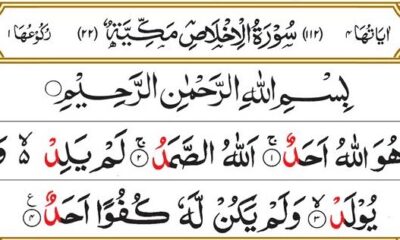
 Surah10 months ago
Surah Al-Ikhlas
-
 Blog1 year ago
Dua e Qunoot